India’s Solar Boom Is Getting Bigger — But Can EPCs Keep Up With Execution?
IThe Indian solar EPC market is expanding rapidly, with new projects, larger capacities, and increasing demand for reliable solar infrastructure. As the market grows, solar EPC companies are facing greater pressure to manage engineering, procurement, project timelines, grid connectivity, and site execution efficiently.
But behind the headline numbers, another story is developing.
India is adding solar capacity faster — but the challenge is increasingly shifting from building projects to executing them efficiently.
In the first half of 2026, India added a record 27 GW of solar capacity, around 49% higher than the same period in 2025. Solar accounted for 76% of the country’s new power capacity during the period.
That is a huge signal for the industry.
But growth at this scale creates a different question:
Can EPCs, engineering teams, procurement teams and project developers execute everything coming through the pipeline without increasing delays, rework and project risk?
That may become one of the biggest challenges for India’s next phase of solar growth.
The Solar Market Is Growing. The Execution Challenge Is Growing With It.
India’s solar story is no longer just about adding capacity.
It is about adding capacity on time, at the right cost, with reliable infrastructure and predictable execution.
Large-scale solar installations accounted for most of the capacity added in H1 2026. At the same time, Mercom reported that large-scale solar tenders in the first half of 2026 were significantly lower than the previous year, suggesting that the market is increasingly focused on executing previously awarded projects.
This changes the role of the EPC.
The question is no longer simply:
“Can you win the project?”
The bigger question is:
“Can you execute the project without losing time, margin and control?”
More Projects Mean More Pressure on EPCs
When project volumes increase, every part of the EPC workflow comes under pressure.
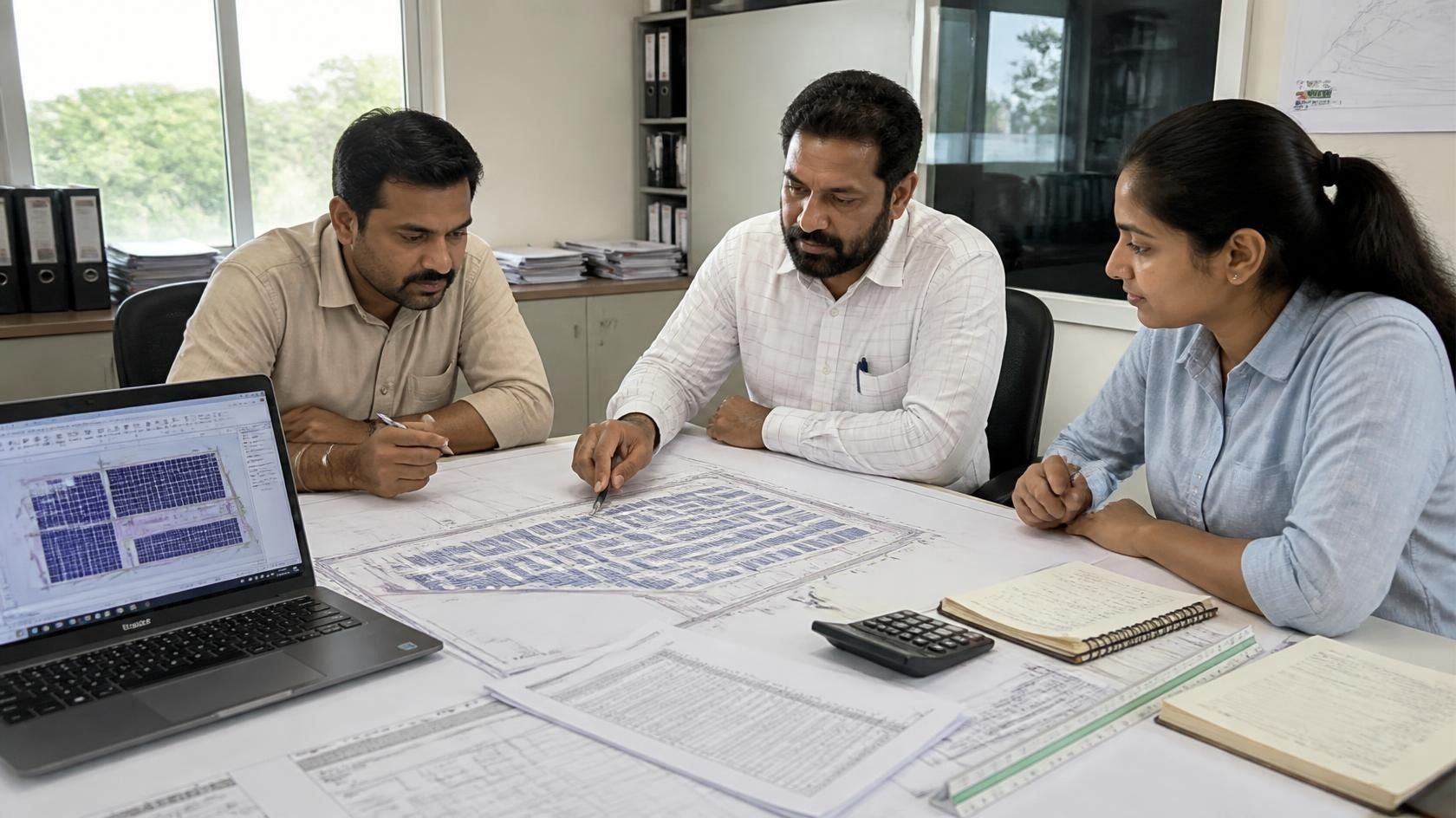
Engineering gets more drawings.
Procurement gets more BOQs.
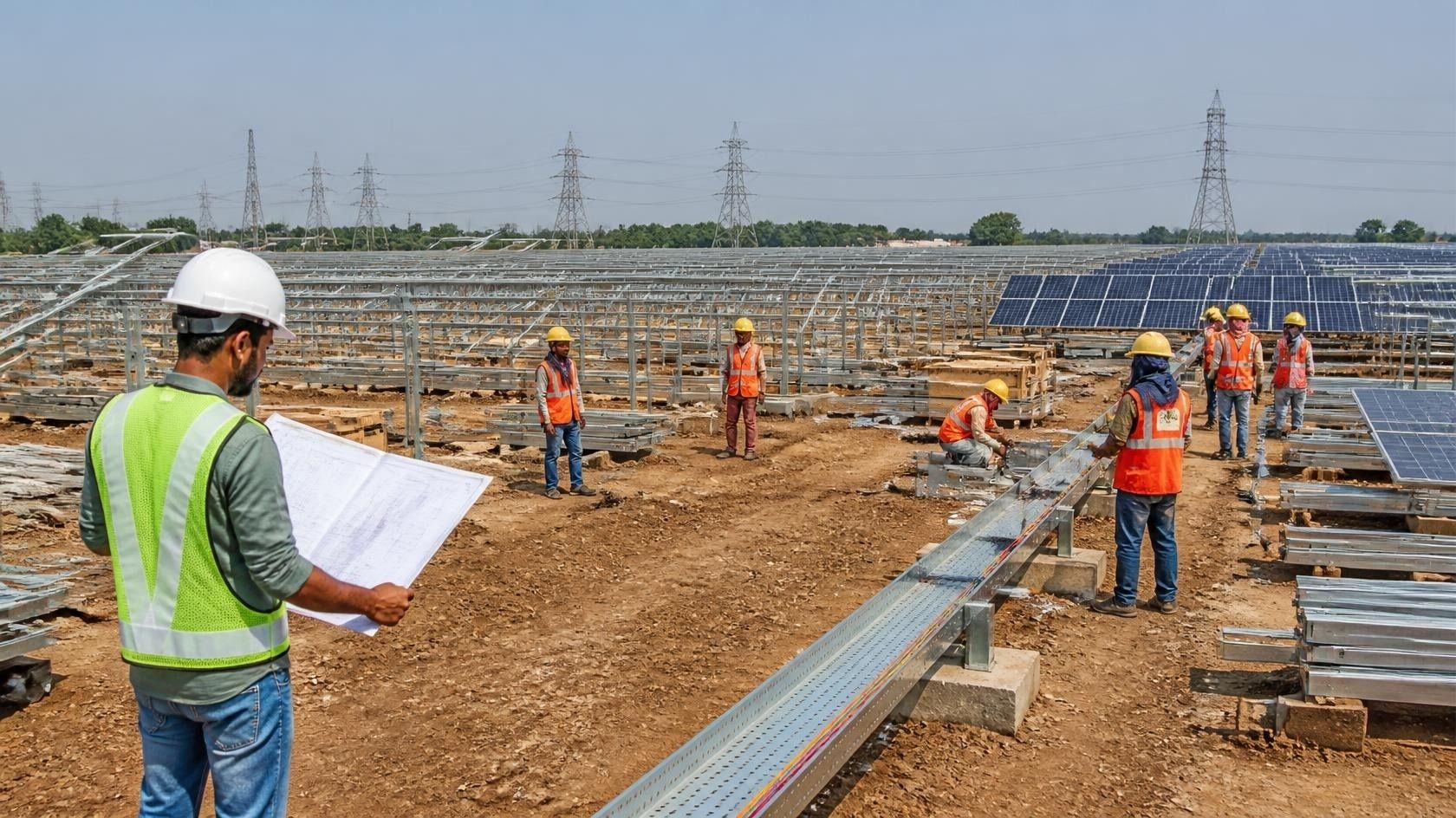
Site teams manage more locations.
Project managers handle more coordination.
Clients expect faster delivery.
And suddenly, a small planning mistake can affect an entire project schedule.
This is where many EPCs face a difficult reality.
Growth can expose weaknesses that were invisible when project volumes were smaller.
A process that works for two projects may not work for ten.
A manual workflow that works for one site may become difficult across multiple sites.
A drawing revision that was manageable once can become a serious coordination issue when several projects are running simultaneously.
The Biggest Problem May Not Be Installation
Solar installation is visible.
Engineering problems often are not.
A site may look ready.
Materials may be available.
The installation team may be waiting.
But if the latest approved drawing is unclear, the BOQ does not match the design, or the structural and electrical plans are not properly coordinated, execution can slow down.
That delay may appear to be a site problem.
But its origin could be much earlier.
Many site problems actually begin during planning.
Design Is Becoming Part of Execution Strategy
For years, design was sometimes treated as a documentation stage.
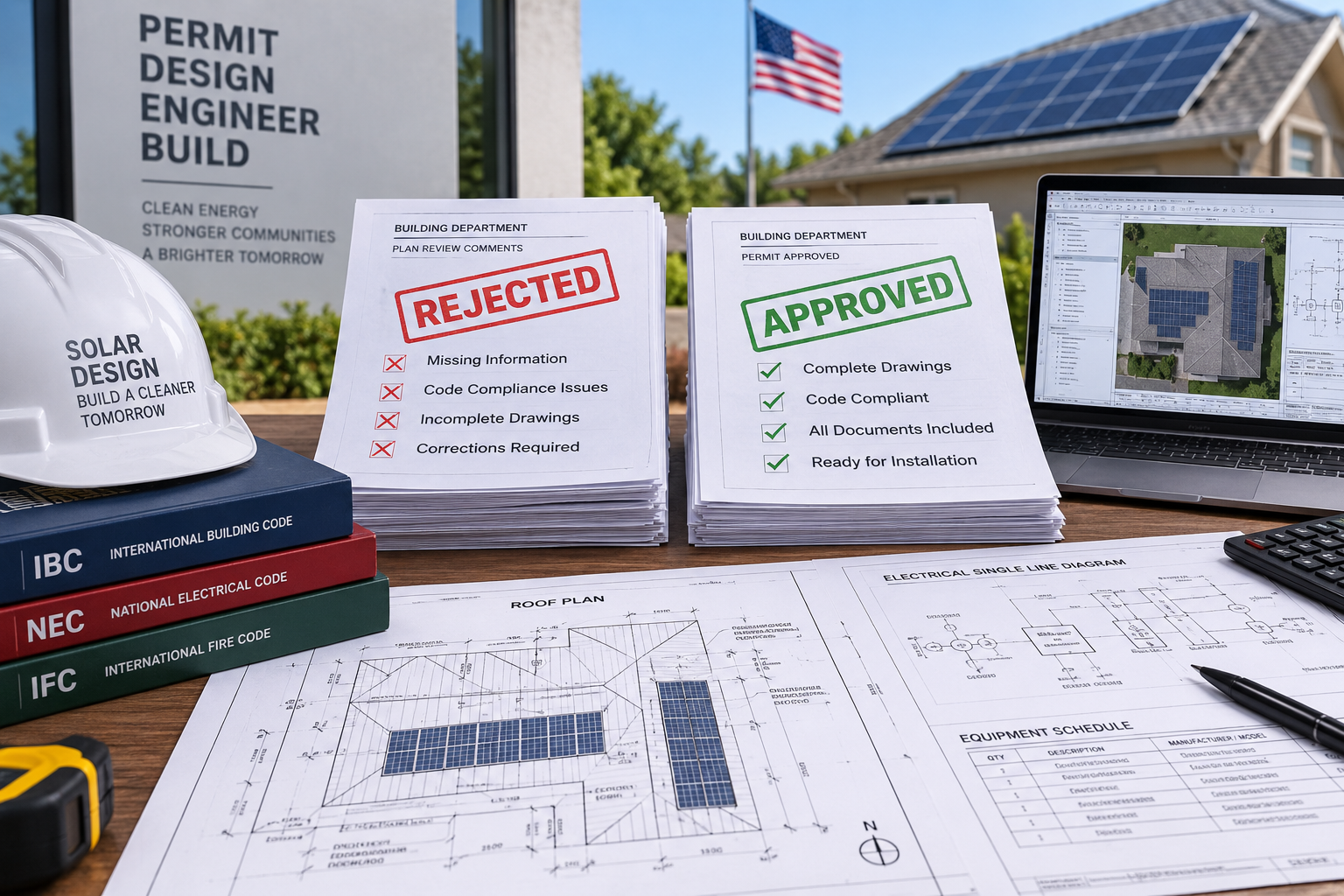
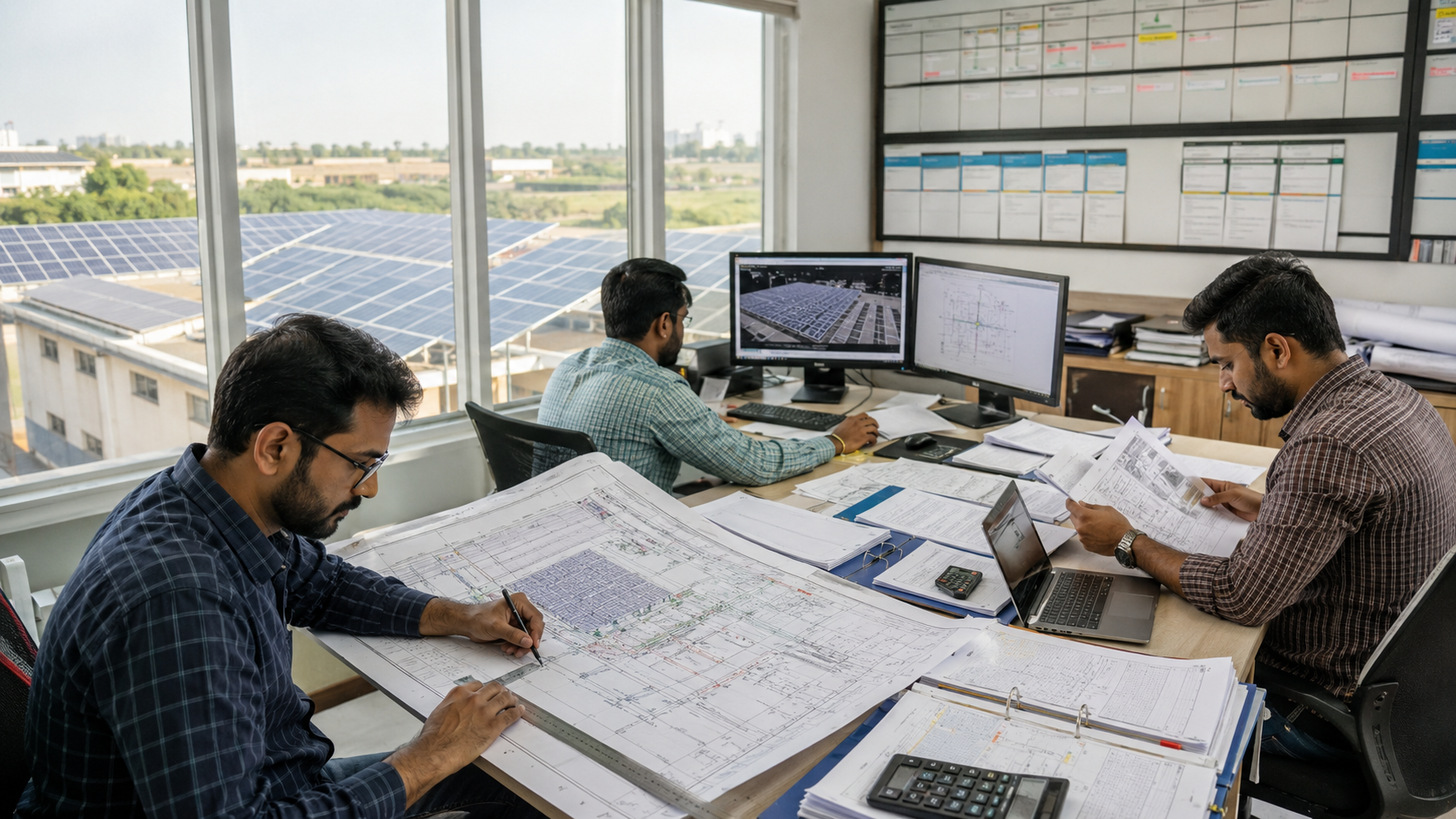
The engineering process includes the solar layout, electrical SLD, structural drawings, and detailed BOQ.
Each document plays a different role, but all of them need to work together.
When these drawings and quantities are properly coordinated, the project team can move from planning to execution with greater clarity and fewer surprises.
Move to installation.
That approach is becoming less effective as projects become larger and more complicated.
Today, engineering has to answer practical execution questions:
- Can this layout actually be installed?
- Is the structure optimized?
- Is cable routing practical?
- Are maintenance paths adequate?
- Does the BOQ match the final design?
- Are electrical and structural drawings coordinated?
- Are site conditions reflected properly?
- Can procurement work directly from the documents?
A drawing that looks technically correct but creates problems during installation is not a successful engineering outcome.
Execution-ready design is becoming more important.
The Margin Pressure Is Real
Solar EPC competition remains intense.
Companies want to win projects.
Clients want competitive pricing.
Developers want better returns.
But aggressive pricing creates pressure when project costs change.
And the cost of poor planning can become significant.
Consider what happens when:
- Cable quantities are underestimated
- Structure quantities change
- Foundation requirements change
- Routing needs to be modified
- Equipment locations shift
- Drawings require repeated revisions
Each issue may look manageable individually.
Together, they can affect the project margin.
This is why profitable EPC execution increasingly depends on controlling uncertainty before construction begins.
Procurement Is Becoming More Complicated
Solar procurement is also changing.
Current Indian market conditions around domestic-content requirements, cell availability and module pricing are creating additional procurement considerations. Industry reporting has highlighted constrained domestic cell availability, higher DCR-compliant module prices and longer delivery timelines as factors affecting project costs and execution.
This means EPCs cannot treat procurement and engineering as separate activities.
The design has to understand what is actually available.
Procurement has to understand what the design actually requires.
And project management needs visibility into both.
A mismatch between these departments can create unnecessary cost and delay.
The Grid Is Becoming Part of the Execution Story
Another major challenge is transmission and evacuation infrastructure.
India’s solar capacity is growing rapidly, but transmission readiness does not always move at exactly the same speed.
Recent industry analysis has highlighted a growing gap between renewable generation capacity and transmission readiness, with potential implications for project commissioning and revenue.
This creates a bigger lesson for EPCs and developers.
A solar project cannot be viewed only as:
Land + Modules + Inverters = Solar Plant
The complete project also depends on:
Grid + Evacuation + Approvals + Engineering + Procurement + Construction + Commissioning
Every part has to move together.
Ground-Mount Projects Need Even More Discipline
Large-scale solar is a major part of India’s current growth.
And larger projects multiply small mistakes.
A minor issue repeated across thousands of modules can become a major cost.
For example:
A small row-spacing problem can affect an entire block.
A cable-routing mistake can repeat across multiple inverter stations.
A structural adjustment can affect hundreds of foundations.
A wrong BOQ assumption can multiply across MW-scale procurement.
This is why large solar projects need more than capacity.
They need engineering discipline.
Open Access Is Adding Another Layer of Opportunity
India’s solar open-access market is also expanding.
Nearly 6 GW of solar open-access capacity was added during H1 2026, up 42% year over year, with cumulative installed open-access capacity reaching 36 GW by June 2026.
This creates opportunities for EPCs.
But open-access projects also require careful coordination around:
- Electrical design
- Evacuation
- Grid connectivity
- Metering
- Approvals
- Project economics
- Transmission requirements
The opportunity is large.
But execution has to be equally strong.
Rooftop Solar Is Growing Too
The story is not limited to utility-scale projects.
India added 6.6 GW of rooftop solar during H1 2026, more than double the capacity added in H1 2025.
That means EPCs are dealing with an increasingly diverse market.
Residential rooftops.
Commercial rooftops.
Industrial rooftops.
Open-access plants.
Ground-mount projects.
Utility-scale projects.
Each requires a different engineering approach.
A one-size-fits-all workflow is unlikely to deliver the same results across all of them.
The EPCs That Adapt Will Have an Advantage
The next stage of India’s solar market may reward EPCs that can combine speed with control.
Not simply:
“Install faster.”
But:
“Prepare better so installation becomes faster.”
That difference is important.
Clear drawings help the site team work faster and with greater confidence.
Accurate quantities allow procurement teams to plan materials more efficiently.
With coordinated engineering, site questions can be resolved before they become installation delays.
Fewer revisions also help EPC teams maintain project schedules and control unnecessary costs.
Better preparation creates faster, more predictable execution.
This keeps the same meaning while removing the repeated sentence openings
Preparation creates execution speed.
What Should EPCs Focus on Now?
As the market becomes larger and more competitive, EPCs should look closely at five areas.
1. Design Coordination
Structural, electrical and layout decisions should work together.
2. Accurate BOQ
Procurement should be based on coordinated and reliable quantities.
3. Execution-Ready Drawings
Site teams need drawings they can actually use.
4. Revision Control
Teams should know which document is current and approved.
5. Early Risk Identification
Site, grid, structural and procurement risks should be identified before they become execution problems.
These may not sound revolutionary.
But at MW scale, consistency becomes a competitive advantage.
The New Solar EPC Advantage
India’s solar market has entered a different stage.
Earlier, the biggest question was:
How much solar can we build?
Now another question is becoming equally important:
How efficiently can we execute what we have already planned?
The companies that answer this question well can build stronger businesses.
Because EPC success is not only about capacity.
It is about:
- Predictable execution
- Controlled costs
- Fewer revisions
- Better engineering
- Reliable procurement
- Better coordination
- Stronger project margins
What This Means for Solar Design
This is where professional solar engineering becomes more than drawing preparation.
Good design should help the project team make better decisions before those decisions reach the site.
A detailed design can help identify:
- Layout constraints
- Shading issues
- Structural requirements
- Electrical routing
- Material quantities
- Equipment positioning
- Installation challenges
The objective is simple:
Make the project easier to execute before execution begins.
Final Thoughts
India’s solar boom is real.
The numbers prove it.
The country added a record 27 GW of solar in the first half of 2026, while the large-scale solar pipeline reached around 208 GW.
But the next challenge is not simply adding more projects.
It is delivering them efficiently.
Transmission has to keep pace.
Procurement has to remain reliable.
Engineering has to become more coordinated.
EPC workflows have to become more disciplined.
And project execution has to become more predictable.
Because when the market grows this quickly:
The advantage will not always belong to the EPC that promises the fastest installation.
It may belong to the EPC that has done the most work before installation even begins.
India’s solar boom is getting bigger.
Now the real test is execution.